Publication Bias and the Funnel Plot
If striking results are published and null ones disappear, the literature is a biased sample—and any meta-analysis on it overstates the effect. How the funnel plot helps reveal it.
Read the articlePractical writing on how to do research well—method guides, publishing advice, and evidence on where fields are heading. New pieces are published regularly.
Practical, evidence-based guides on research methods, analysis, and publication. New briefs are published regularly—subscribe via RSS.
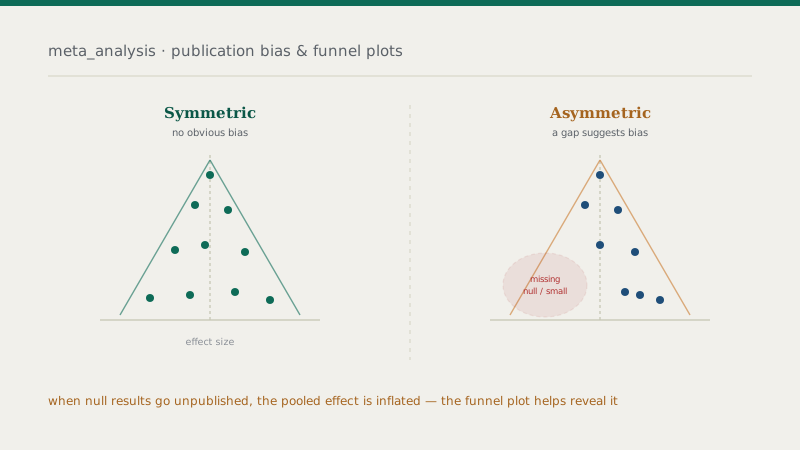
Why unpublished null results inflate a meta-analysis, how the funnel plot detects it, and the best defence.
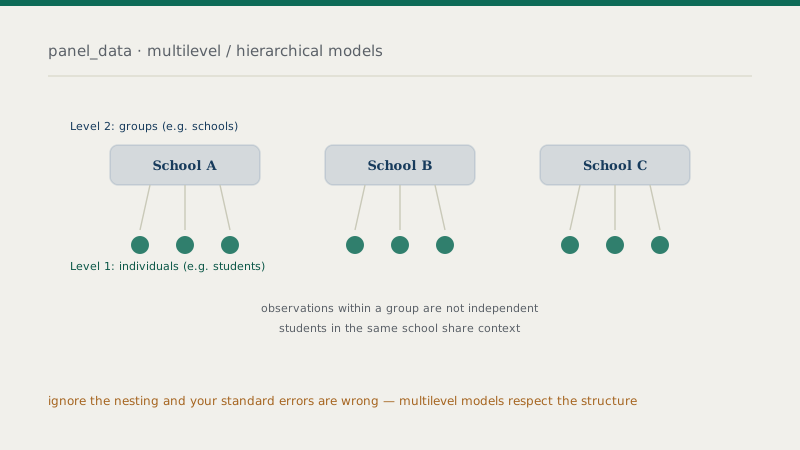
What nested data is, why ignoring it breaks your standard errors, and what random effects and partial pooling do.
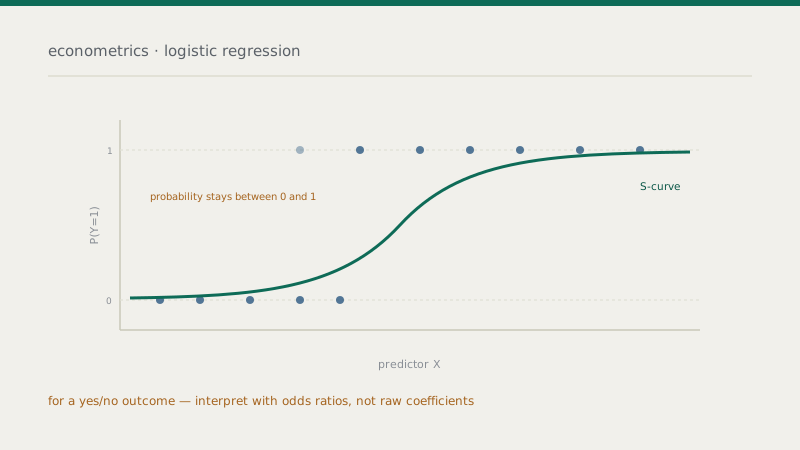
Why binary outcomes need an S-curve, how to interpret odds ratios, and why an odds ratio isn’t a risk ratio.
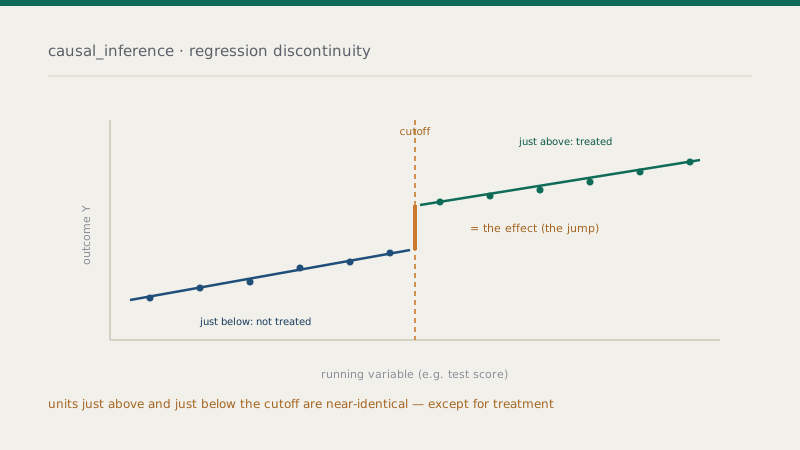
How a cutoff creates a near-experiment, the testable smoothness assumption, sharp vs fuzzy designs, and local effects.
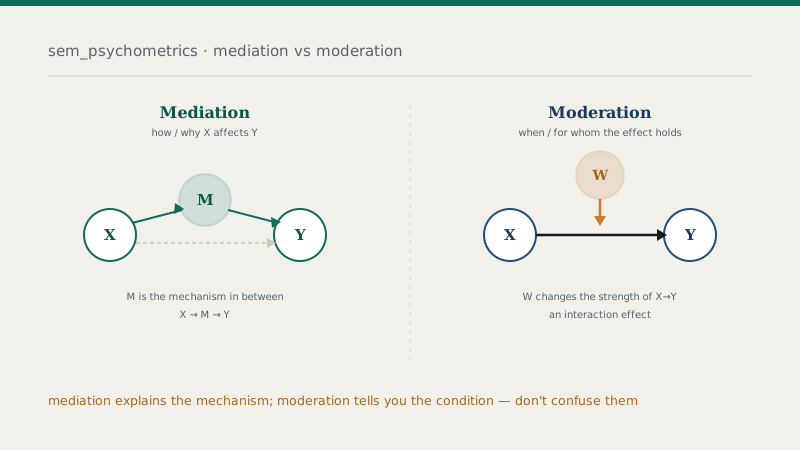
Mechanism vs condition, how each is analysed, and how they combine as moderated mediation.
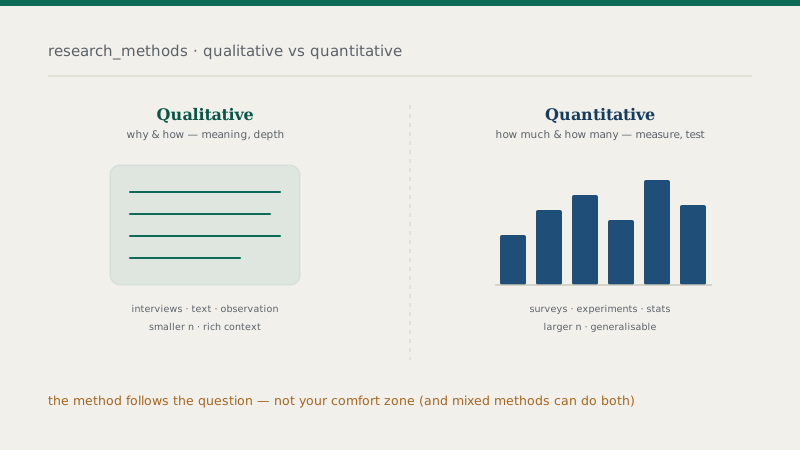
Measuring vs understanding, when to use each, how mixed methods combines them, and letting the question decide.
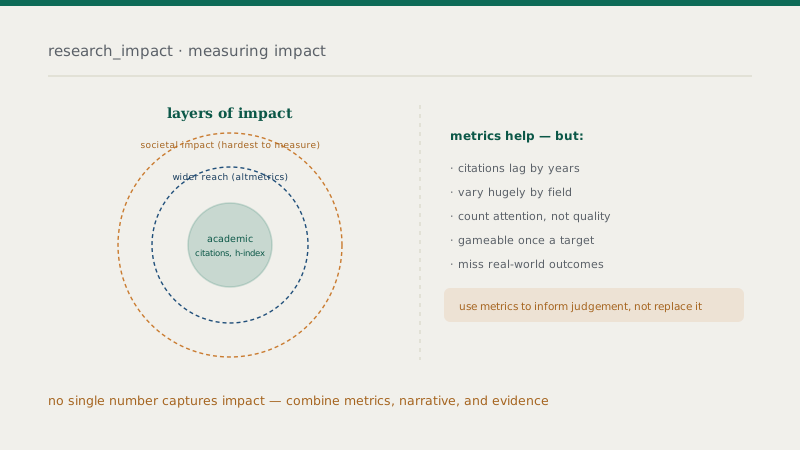
The layers of impact, academic metrics and their limits, altmetrics, impact case studies, and responsible use.
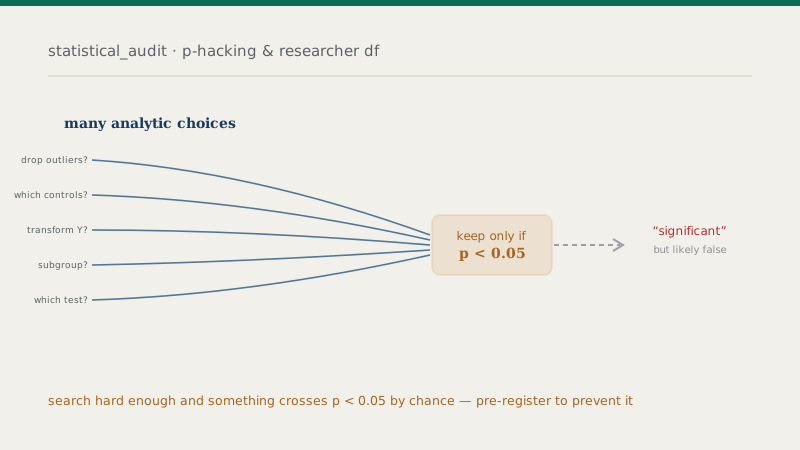
How selecting analyses for significance manufactures false positives—and how pre-registration prevents it.
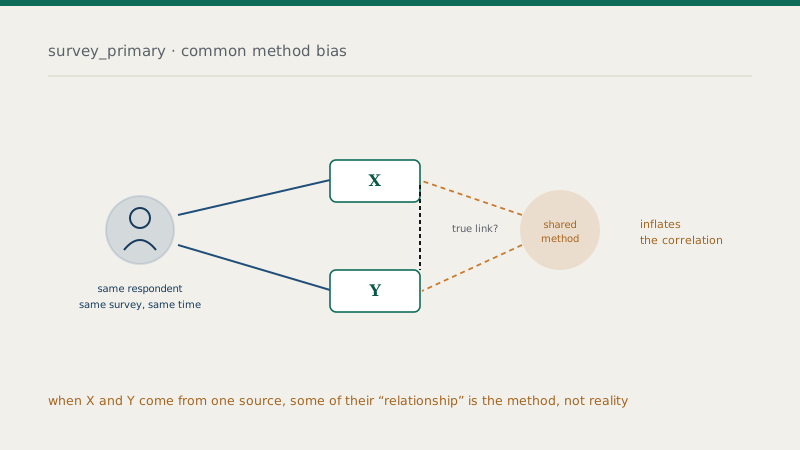
What it is, where it comes from, how to design against it, and why statistical checks can’t fix it.
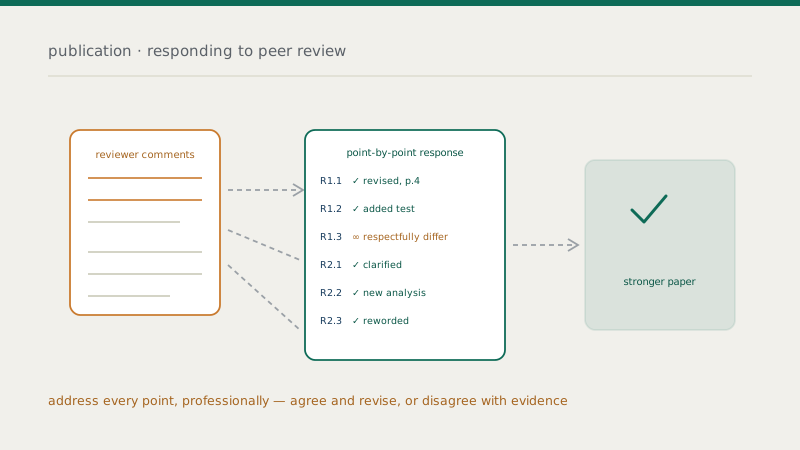
Reading reviews, the point-by-point response letter, handling disagreement, and the tone that wins acceptance.
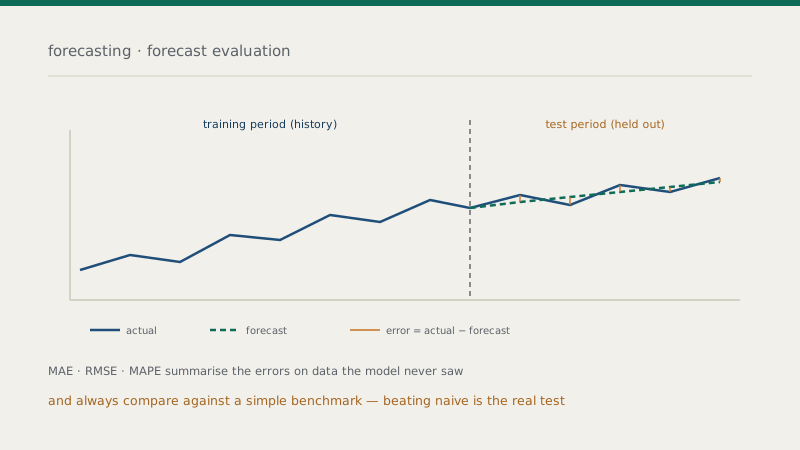
Out-of-sample testing, MAE/RMSE/MAPE and their trade-offs, and why you must beat a naive benchmark.
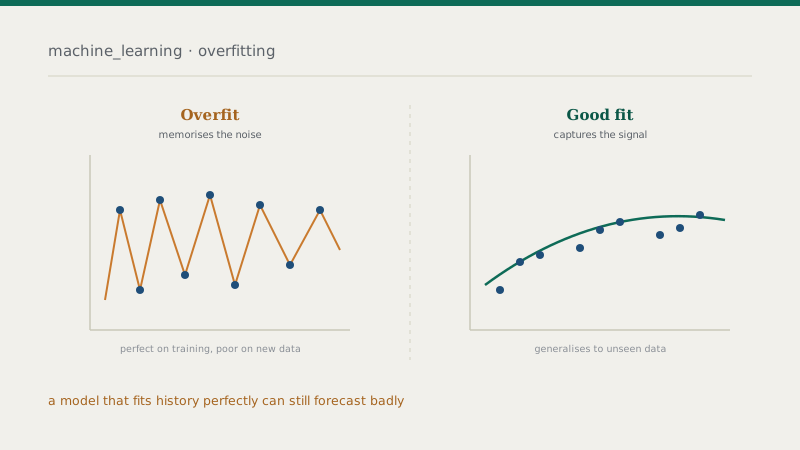
What overfitting is, why it happens, how to detect it with cross-validation, and how to prevent it.
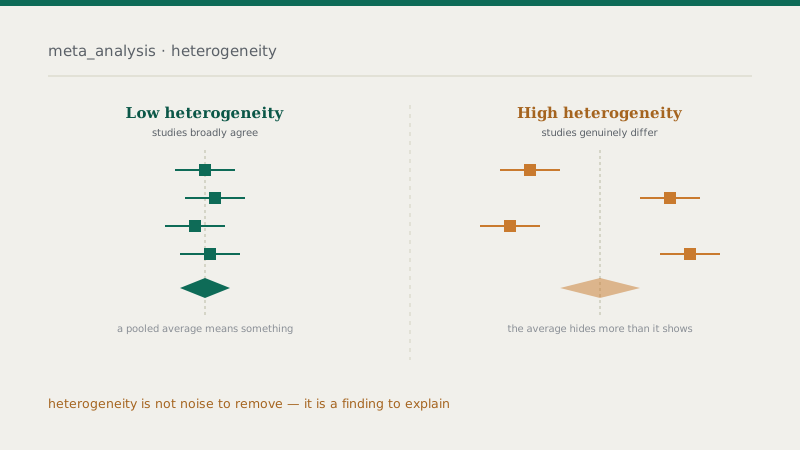
What it is, how I-squared and tau-squared measure it, random-effects models, and when not to pool.
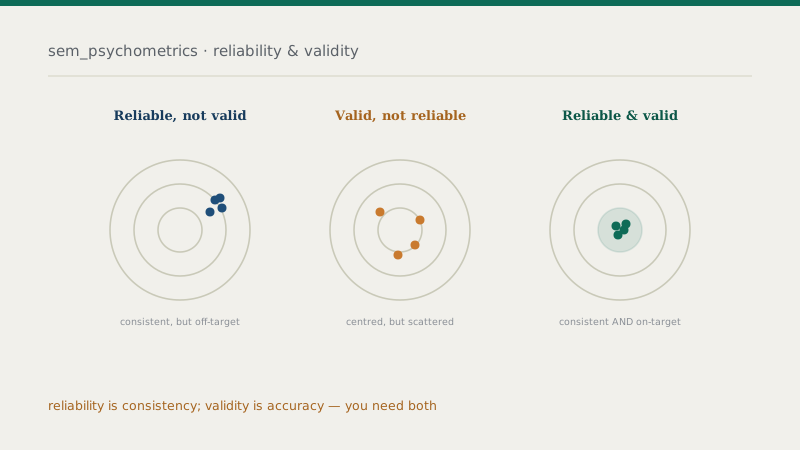
Consistency vs accuracy, the types of each, and why measurement quality must be established before analysis.
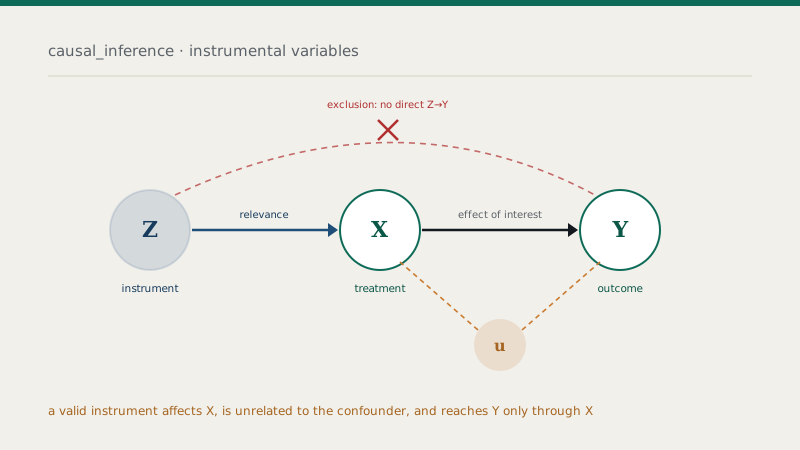
How an instrument recovers a causal effect, the two validity conditions, and what IV actually estimates.
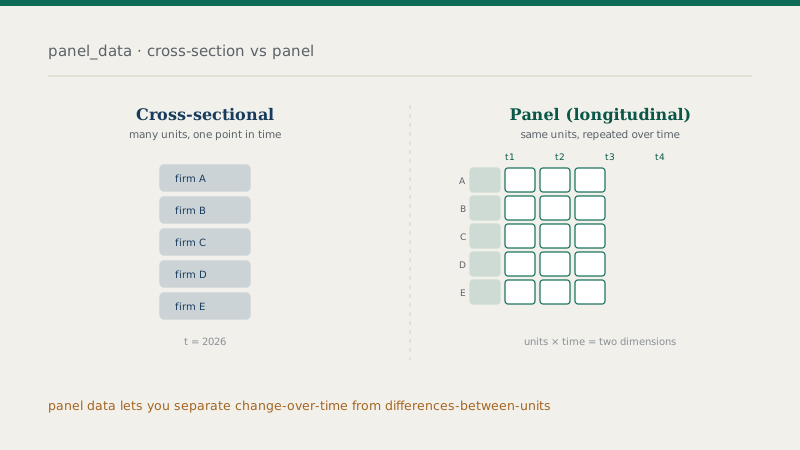
The three data structures compared, and why panel data supports far more credible causal claims.
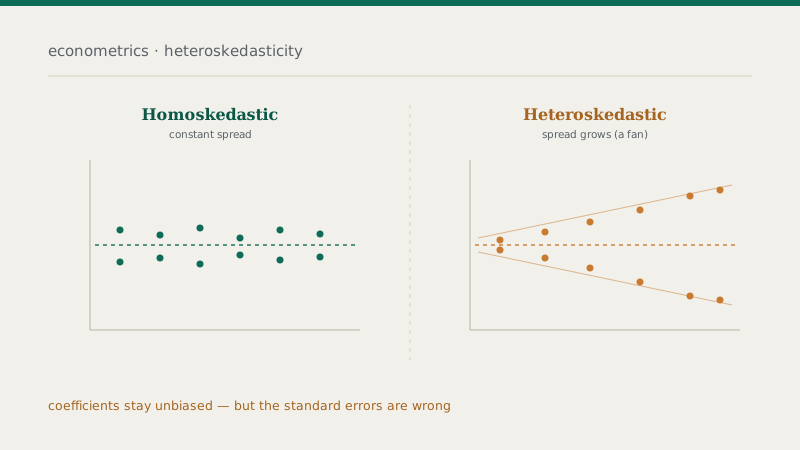
Why it invalidates the usual standard errors (but not the coefficients), how to detect it, and the robust-SE fix.
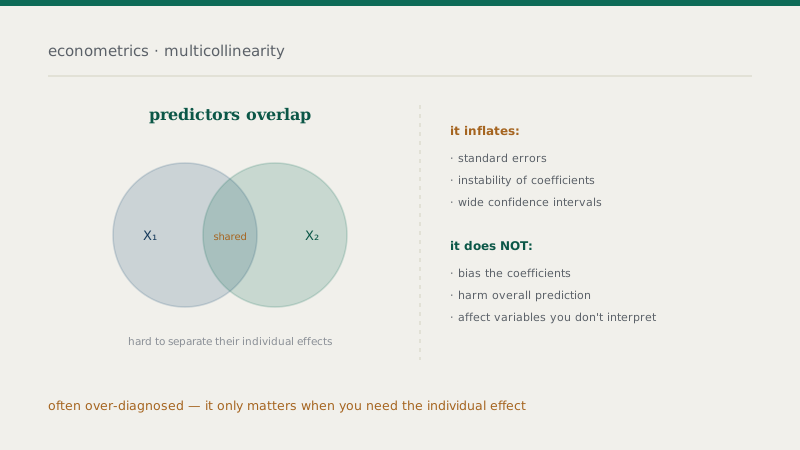
What it affects, what it doesn’t, how to detect it with VIF, and when it actually matters.
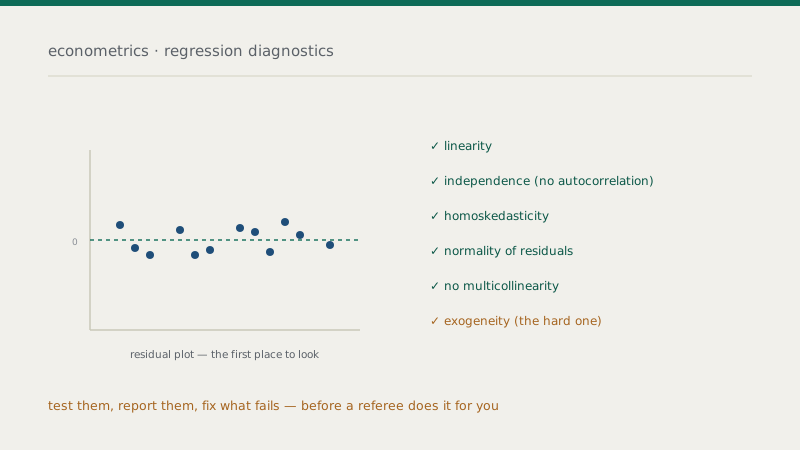
A practical checklist: how to test linearity, homoskedasticity, autocorrelation, collinearity, and exogeneity.
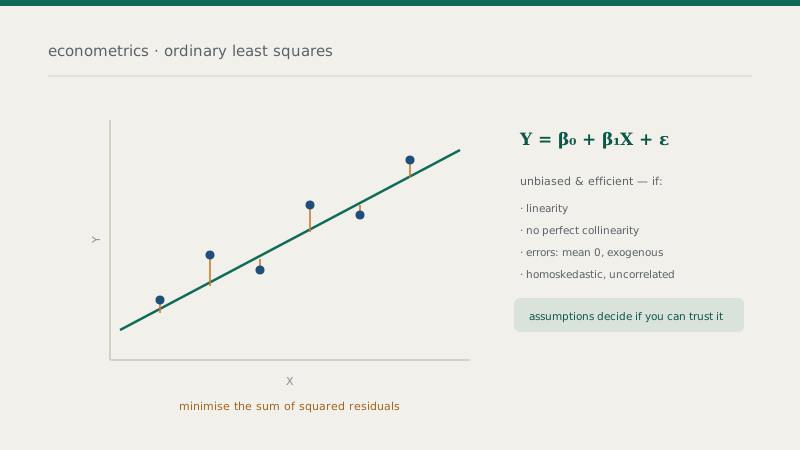
What OLS does, why it's BLUE, the assumptions that decide if results can be trusted, and what to do when they fail.
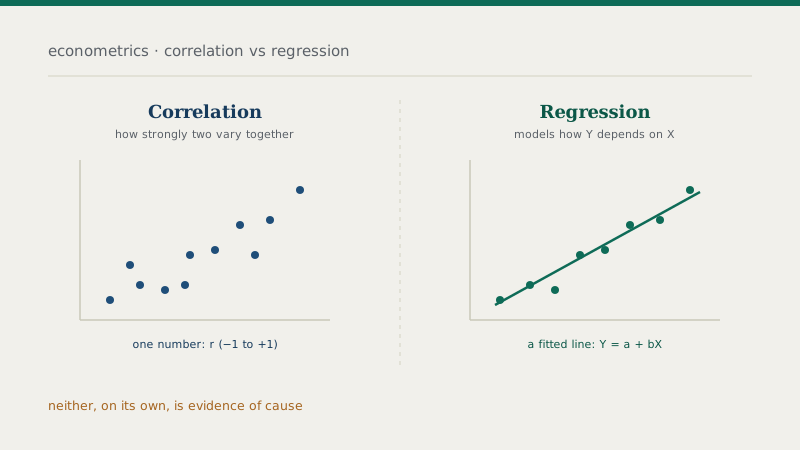
What each measures, how they relate, and why neither, on its own, proves causation.
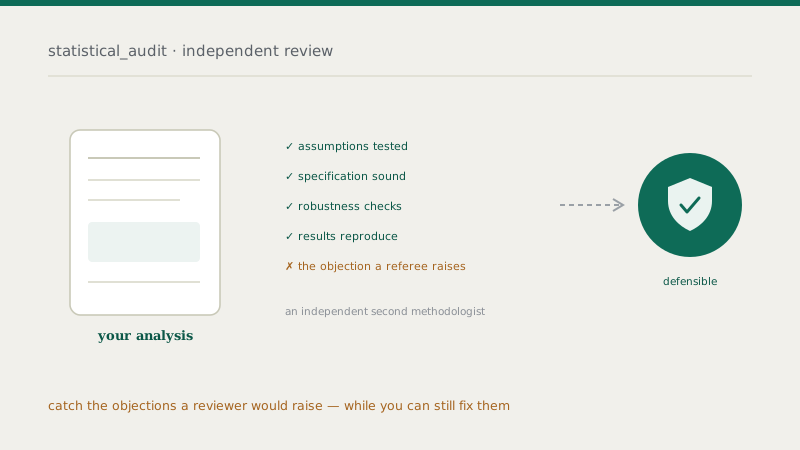
An independent review of assumptions, specification, robustness, reproducibility, and reporting — before you submit.
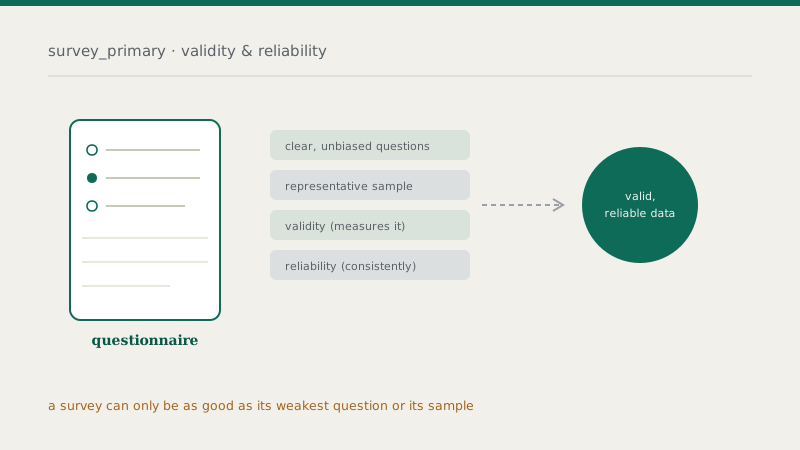
Validity vs reliability, writing good questions, validated scales, representative sampling, and biases to avoid.
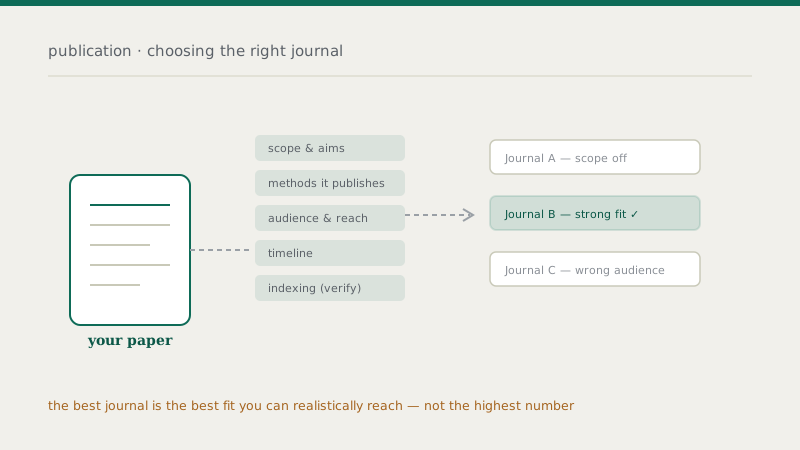
Why fit beats prestige, how to assess scope and audience, building a shortlist, and verifying before you submit.
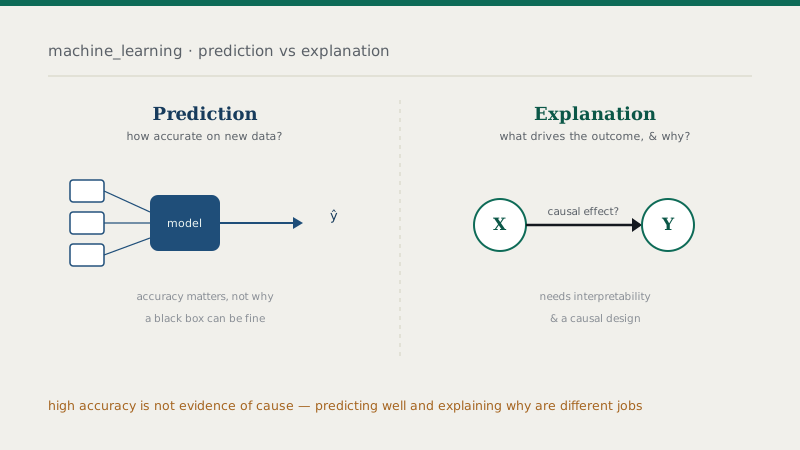
Why high accuracy is not evidence of cause, out-of-sample evaluation, and using interpretable and causal ML.
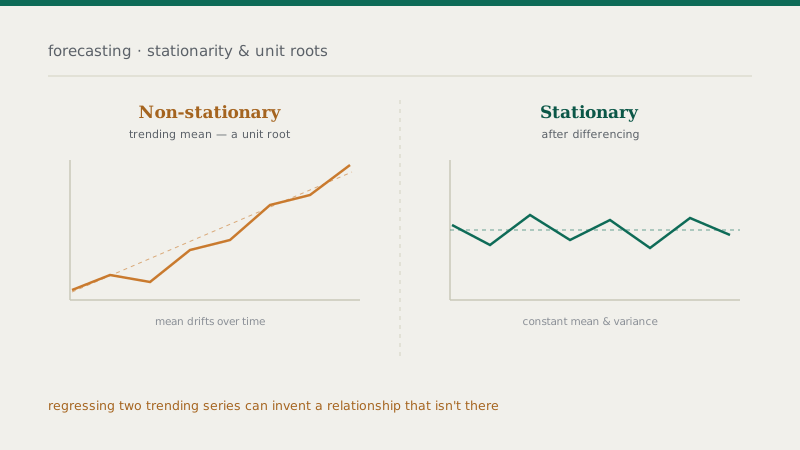
What stationarity is, the spurious-regression trap, unit-root testing, differencing, and cointegration.
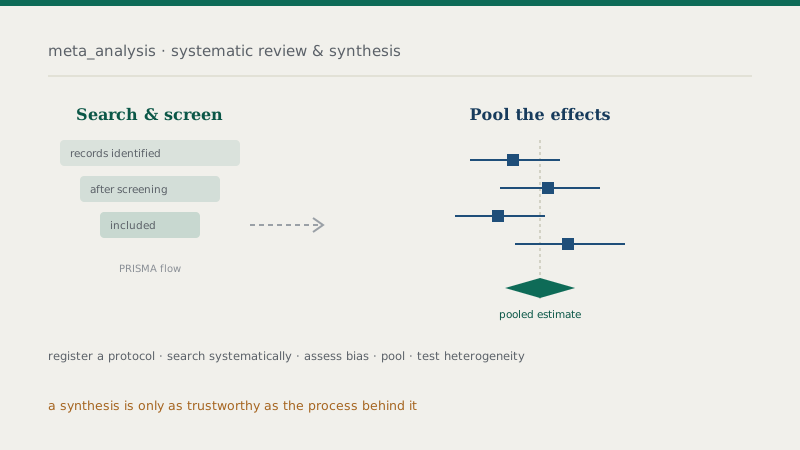
Protocol, systematic search, risk-of-bias, pooling, heterogeneity, and reporting to PRISMA standards.
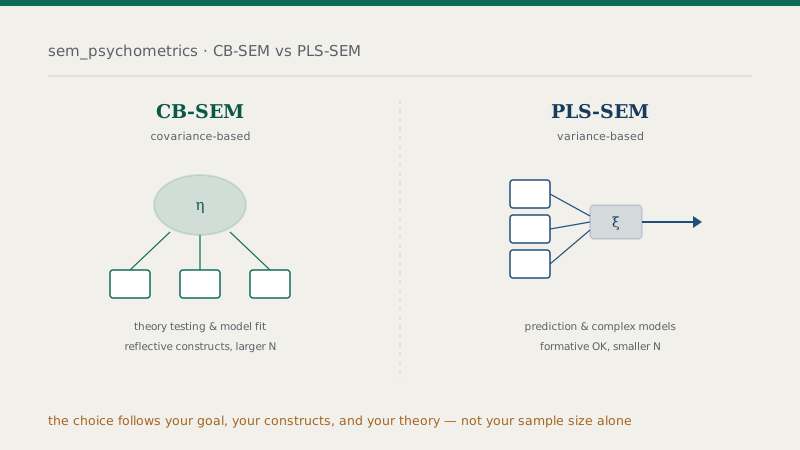
The real difference between covariance- and variance-based SEM, why sample size shouldn't decide it, and how to choose.
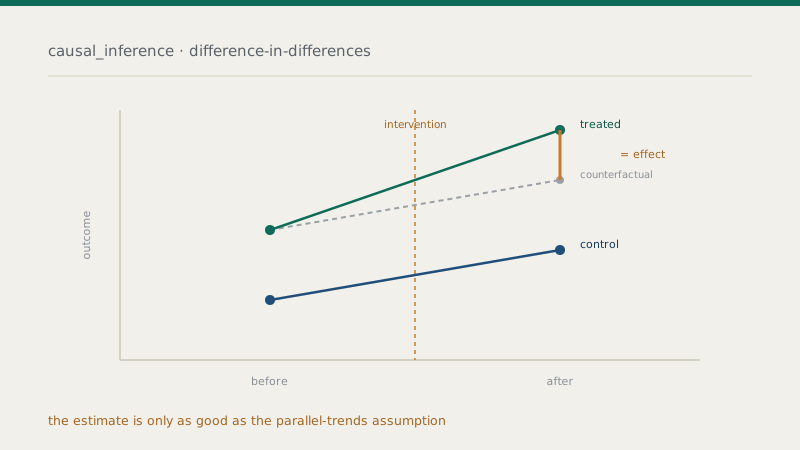
How it estimates causal effects, the parallel-trends assumption, and why staggered adoption needs modern estimators.
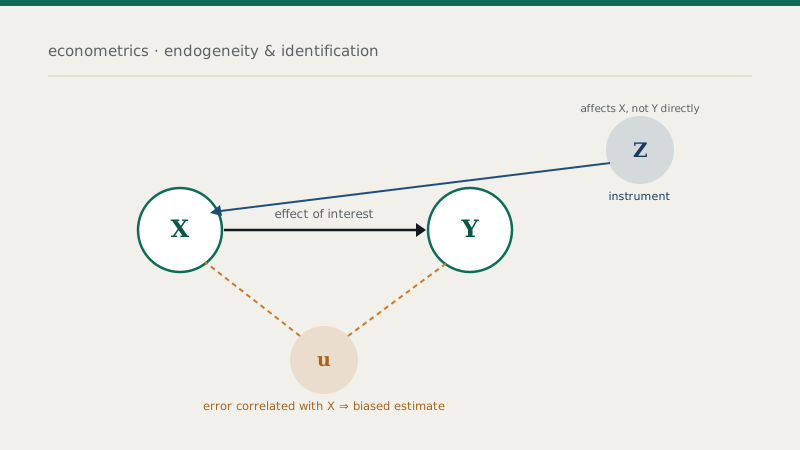
What it means, its three sources, and how to address it with controls, fixed effects, instruments, and design.
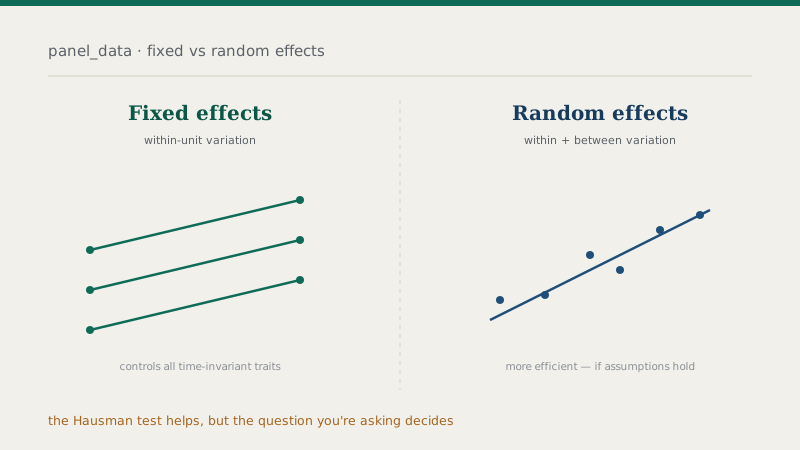
What each does, the assumption that separates them, the limits of the Hausman test, and how to choose.
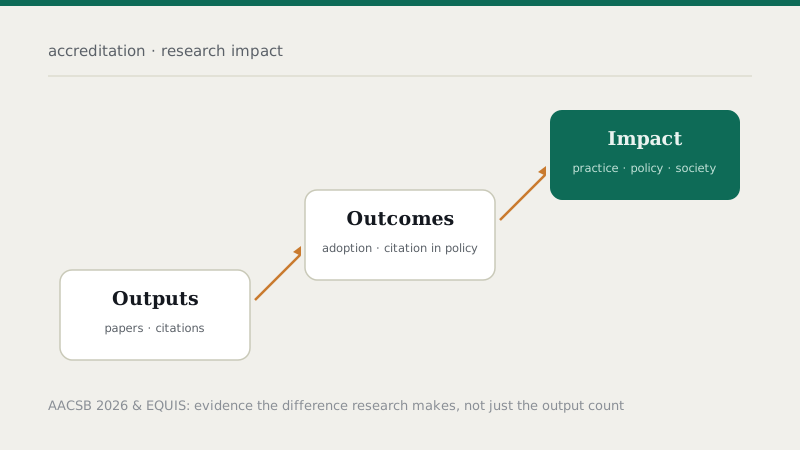
What the 2026 standards ask for, the outputs-outcomes-impact distinction, and how to build a credible evidence base.
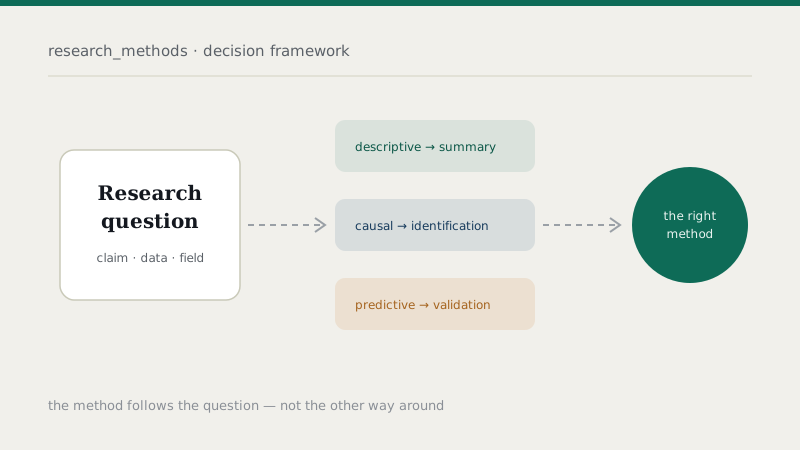
A decision framework: start from the claim, match it to your data, and account for what your field expects.
More articles are on the way. In the meantime, explore the Research Methods capability, or suggest a topic you'd like us to cover.
Each topic maps to a full capability. Articles are organised around these areas so you can go from a guide straight to the underlying expertise.
Choosing and applying the right method for your question and data.
ExploreOLS, diagnostics, endogeneity, and the assumptions behind credible estimates.
ExploreFixed vs random effects, dynamic panels, and data observed over time.
ExploreDifference-in-differences, RDD, IV, and establishing genuine effects.
ExploreMeasurement, factor analysis, reliability, and structural models.
ExploreSystematic reviews, effect sizes, heterogeneity, and forest plots.
ExploreStationarity, ARIMA, VAR, and evaluating forecasts honestly.
ExplorePrediction vs explanation, overfitting, and interpretable models.
ExploreJournal selection, quartiles, and responding to reviewers.
ExploreAACSB & EQUIS evidence, research impact, and institutional research intelligence.
ExploreQuestionnaire design, experiments, sampling, and qualitative and mixed methods.
ExploreIndependent methodological review, robustness checks, and reproducible workflows.
ExploreOur Journal Finder helps you discover journals by field and scope, and verify indexing through official sources.