How to Respond to Peer Review: A Practical Guide
A revise-and-resubmit is good news—but how you respond to the reviewers often decides whether the paper is ultimately accepted. This guide covers how to read reviews, structure a response, handle disagreement, and turn a demanding review into a stronger paper.
Few moments in research are as charged as opening a decision email. A rejection stings; an outright acceptance is rare; the most common outcome for a promising paper is a request to revise and resubmit, accompanied by pages of reviewer comments. That request is genuinely good news—it means the editor sees potential—but it is not an acceptance. What happens next, and specifically how well you respond to the reviews, often determines whether the paper crosses the line. A strong response can rescue a paper the reviewers were lukewarm on; a weak or defensive one can sink a paper they were inclined to accept.
This guide is a practical walkthrough of responding to peer review: how to read the comments, how to structure your response, how to handle points you disagree with, and the professional tone that makes editors and reviewers want to say yes. It complements our guide to choosing the right journal and reflects the reviewer-response support in our Publication Support practice.
First, read and sit with the reviews
The reviews will often feel harsher than they are. Reviewers write tersely, focus on problems rather than praise, and sometimes misunderstand parts of the paper—which is itself useful information about where the writing was unclear. The single most important first step is emotional: do not respond immediately. Read the comments, set them aside for a day or two, and come back when the initial defensiveness has faded. Almost every review, read calmly, contains a core of legitimate concerns that will genuinely improve the paper.
When you return, read analytically. Separate the comments into categories: substantive methodological concerns, requests for clarification, points where the reviewer misread something, minor corrections, and—occasionally—requests you cannot or should not accommodate. This triage tells you where the real work is and shapes the response to come. It also often reveals that comments from different reviewers overlap, or even conflict, which the editor will expect you to navigate thoughtfully.
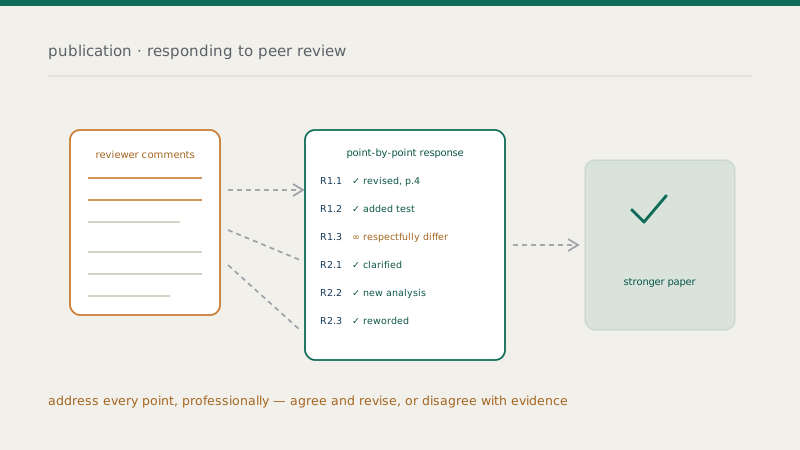
The golden rule: address every point
The cardinal principle of a peer-review response is simple: respond to every single comment, individually and explicitly. Nothing frustrates a reviewer more than finding their concerns ignored, and an editor reading your response letter is checking, point by point, that each comment has been dealt with. The standard, expected format is a point-by-point response letter: quote or paraphrase each reviewer comment, then directly beneath it explain exactly what you did in response and where in the revised manuscript the change appears.
This structure serves everyone. It shows the reviewer you took their comment seriously, it lets the editor verify your revisions quickly, and it imposes a discipline on you—forcing you to confront every point rather than quietly skipping the awkward ones. Referencing specific page, section, or line numbers for each change, and often quoting the revised text directly in the letter, makes the reviewer’s job easy—and a reviewer whose job you have made easy is far more likely to recommend acceptance.
Make the reviewer’s job easy. A point-by-point letter that quotes each comment, states exactly what changed, and points to the page number lets a reviewer verify your revision in seconds—and a reviewer who can easily see their concerns were addressed is a reviewer inclined to say yes.
When you agree—and when you don’t
Most comments you will simply act on: make the change, and say clearly what you did and where. Gracious, specific acknowledgement (“We thank the reviewer for this point; we have added…”) costs nothing and builds goodwill. The harder cases are the comments you disagree with—and here the response requires care, because you are allowed to disagree, but you must do it well.
You are not obliged to make every change a reviewer requests. Sometimes a reviewer misunderstands, asks for something outside the paper’s scope, or requests an analysis that would not be appropriate. In these cases you can respectfully decline—but never by simply refusing. Explain your reasoning clearly, back it with evidence or citations, and remain courteous. Often the best response to a misunderstanding is to concede that if an expert reviewer misread this, other readers will too, and to revise the text for clarity even while holding your analytical ground. Disagreement handled with evidence and respect strengthens your credibility; disagreement handled with defensiveness or dismissiveness is one of the fastest routes to rejection.
Tone is everything
Throughout, the tone of the response letter matters as much as its content. Reviewers and editors are people who have given their time, usually unpaid, to evaluate your work, and they respond to professionalism and courtesy. Thank them genuinely, treat even the frustrating comments as good-faith attempts to improve the paper, and keep the letter measured and constructive regardless of how you feel. Avoid sarcasm, defensiveness, and any hint that a comment was beneath your attention. A response letter that reads as gracious and thorough predisposes everyone toward acceptance; one that reads as irritated or grudging predisposes them against it, even when the revisions themselves are sound.
The reframe: reviews make the paper better
The most useful shift in mindset is to stop seeing peer review as an obstacle and start seeing it as free, expert consulting on your work. Reviewers are subject specialists who have read your paper closely and told you exactly where it can be strengthened—a service that would cost a great deal to commission. The overwhelming majority of papers genuinely improve through the revision process: arguments get sharper, weaknesses get shored up, and the final published version is better than the one first submitted. Approaching the response in that spirit—grateful, rigorous, and open—produces both a better paper and a better outcome.
The bottom line
A revise-and-resubmit is an opportunity, and the response is where it is won or lost. Read the reviews calmly, triage them, and respond to every single point in a clear, point-by-point letter that says exactly what you changed and where. Act on the comments you agree with graciously; disagree, where you must, with evidence and courtesy rather than defensiveness. Keep the whole letter professional and appreciative. Handle the response this way and you do two things at once: you give the paper its best chance of acceptance, and—because good reviews really do improve papers—you make the work genuinely better.
Frequently asked questions
Turning a revise-and-resubmit into an acceptance?
Our publication team can help you plan the revisions, run any additional analysis reviewers ask for, and draft a point-by-point response that gives your paper its best chance.